Public pain is the new buying signal: a pain-post outreach playbook
Someone wrote a public complaint about a workflow you fix. The people who agreed in the comments are the warmest possible leads. Here is the full play.
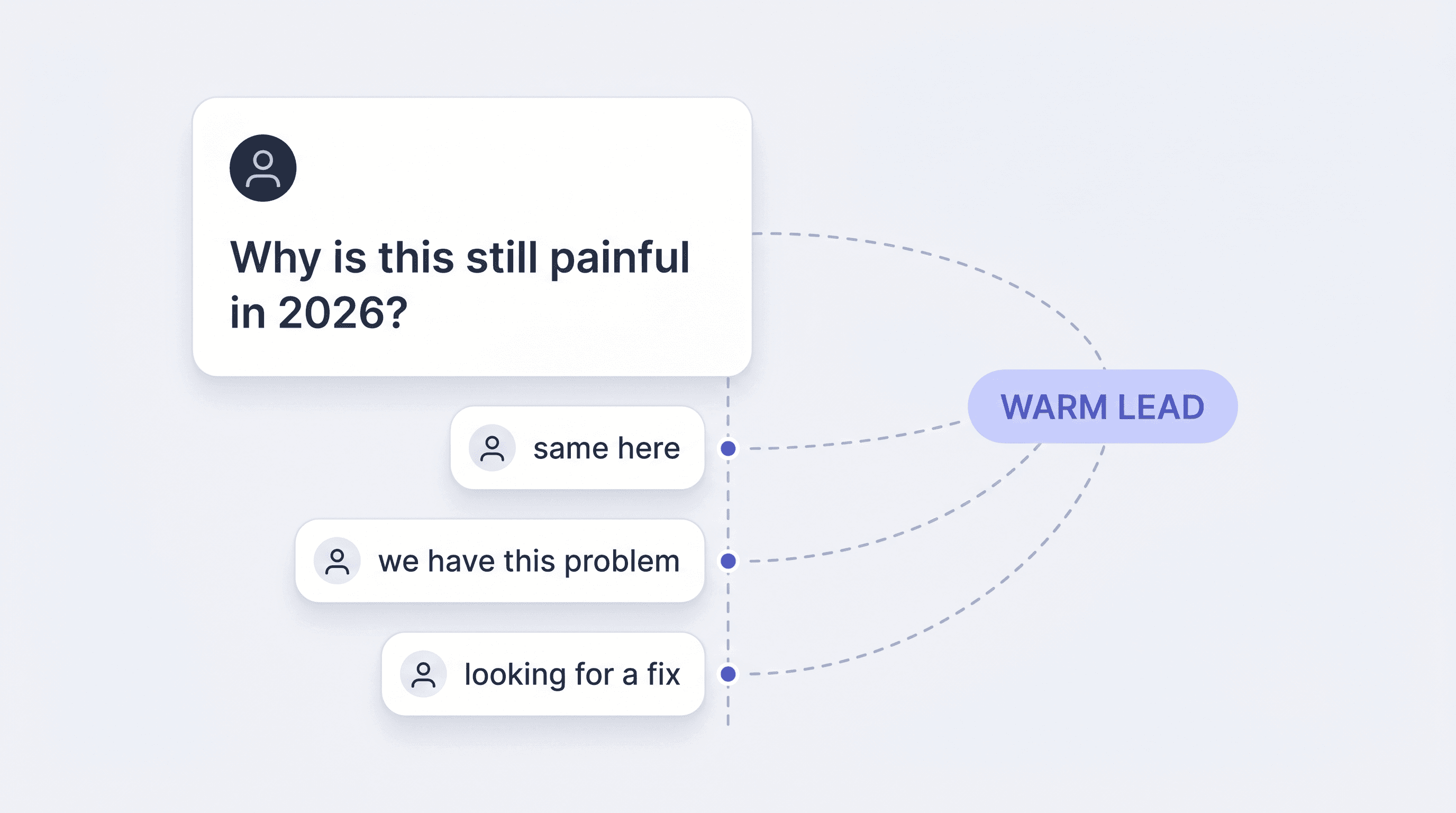
Someone in your category just wrote this publicly:
"Why is [thing your product fixes] still so painful in 2026?"
The post got 40 comments.
Every commenter who agreed is in your ICP.
Every commenter who shared their own version of the problem just told you they have it.
This is the cleanest buying signal that exists.
Most teams scroll past it.
Why pain posts work
The author has a problem.
The commenters have the same problem.
They are saying it out loud, in public, with their names attached.
You did not push them. You did not nudge them. They volunteered.
If you cannot convert a list of people who publicly complained about your category, the problem is not the list.
The full play
It runs in four moves.
1. Find the post
Three sources.
- Pain-post commenters on competitor content.
- Pain-post threads under category influencers.
- Direct keyword search ("looking for a tool to", "tired of", "anyone else dealing with").
Pull the post. Pull every commenter. Drop the off-ICP names.
2. Drop the most useful public answer
The author asked a question. Most replies are noise. One reply will be the most useful answer in the thread.
That reply is yours.
Rules:
- No link.
- No pitch.
- One real insight grounded in actual expertise.
The author often pins the comment. Other commenters like it. Your name sits at the top of the thread.
You just earned the right to DM everyone in that thread.
3. Wait
This is the part most teams skip.
Send the DM the same day, and the prospect remembers the comment but not enough to care.
Send the DM three days later, and the comment is still fresh. The prospect has had time to process. They check the profile. They are open.
4. Send the DM that quotes their words
Pull the prospect's exact comment from the thread.
Paste a fragment into your DM.
Add one specific observation.
Ask one question.
Done.
This is the entire opener.
If they reply, you have a conversation. If they do not, you have warm context for the next touch.
A concrete example
Imagine a competitor posts about a new CRM feature.
A VP Sales comments: "Honestly, we keep losing deals because our reps cannot tell who they already messaged. Tools claim to fix it. None of them do."
The agent pulls that comment. Three days later, the DM looks like this:
Saw your comment under [post] about reps losing track of who they messaged. We have a customer that had the exact same problem with their five-rep team. Quick question — when a rep DMs a prospect on LinkedIn and the same prospect later replies to a different rep on email, do you have any system that catches that today?
No pitch.
One specific question.
Tied to their exact words.
That message converts at a different rate than a cold opener.
Because it is not cold.
The bet
Watch your category for one week.
Pull every pain post and every commenter who confirmed the pain.
Reply publicly to one. DM ten others three days later.
Track replies.
Then ask yourself why you ever wrote a cold message in the first place.