AI SDR vs Human SDR: What the Numbers Actually Say
A real comparison of costs, ramp time, and output between AI sales workflows and human SDRs. With data.
The average SDR tenure in the US is 14–18 months. Most teams lose three out of every ten SDRs in a given year. And the ramp to first productive meeting is three to five months.
None of that is a criticism of the people. It's just how the role works.
The question isn't whether AI is "better" than a human SDR. It's whether the specific tasks that take up most SDR time—account research, outreach, follow-up, scheduling—are better handled by software that never takes a sick day, never resigns for a 20% bump, and costs about a fifth of what you pay a junior hire.
What a human SDR actually costs
The number most hiring managers budget for is base salary. That's a mistake.
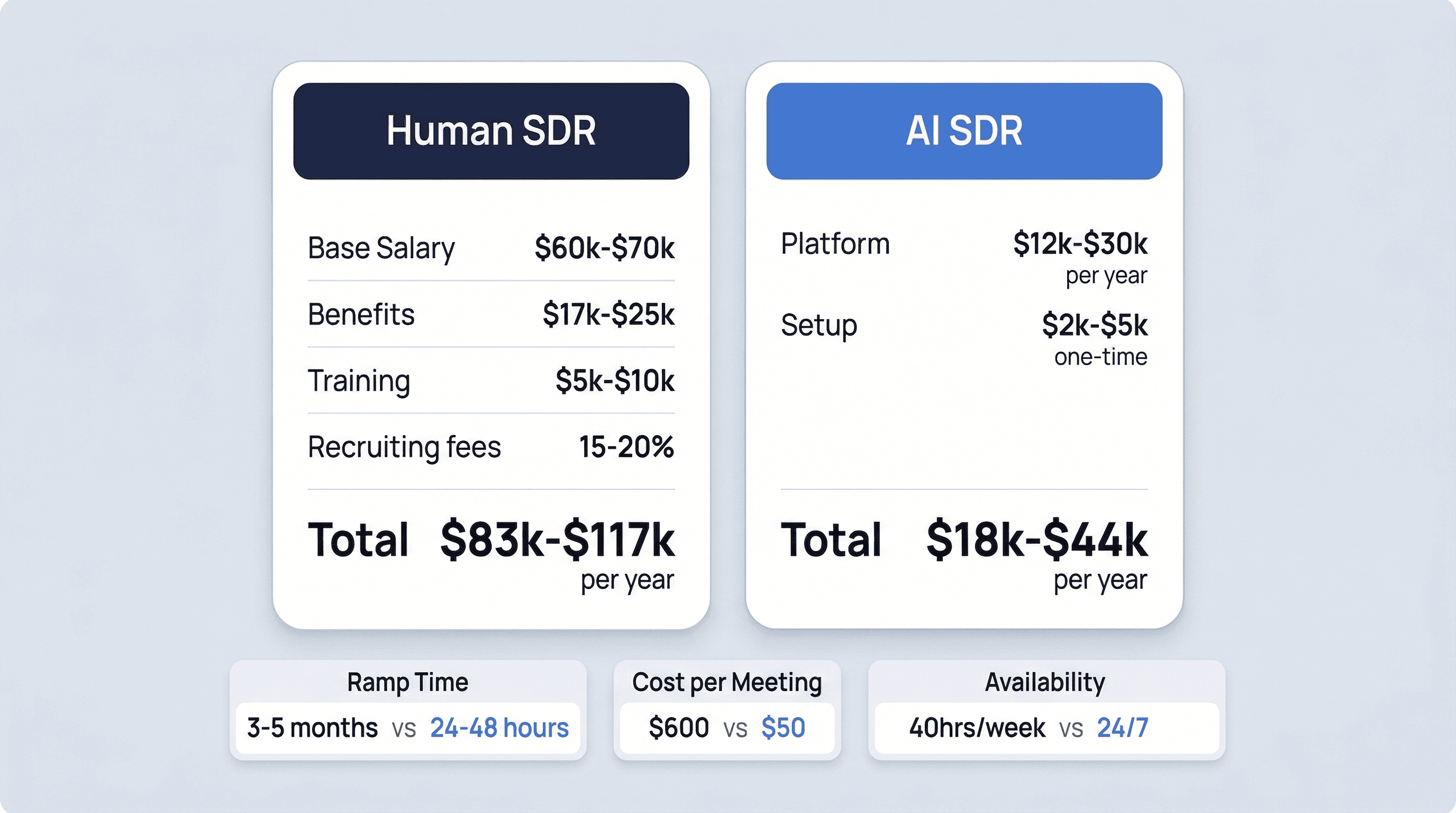
A US SDR with a $60,000 base salary ends up costing closer to $110,000 when you add it all up. Here's the breakdown:
- Base salary: $60,000–$70,000
- Benefits and taxes: $17,000–$25,000
- Tools (CRM, LinkedIn Sales Navigator, email platform): $3,000–$5,000
- Training and onboarding: $5,000–$10,000
- Recruiting fees (if external): typically 15–20% of first-year salary
- Management overhead: $8,000–$12,000
Fully loaded, one SDR is $83,000–$117,000 per year. Before they've booked a single meeting.
Then factor in ramp time. Most SDRs take three to five months to reach full quota. During that window, you're paying full cost for partial output. And SDR attrition runs 30–40% annually—so the average hire costs you one cycle of ramp before they leave.
The compounding math is brutal. A 10-person SDR team losing three or four reps per year burns through $200,000+ in turnover costs alone, not counting the months of lost pipeline.
What AI costs
An AI SDR platform runs $1,000–$2,500 per month for most providers. Fully loaded—email infrastructure, domain warmup, setup, integration—expect $18,000–$44,000 per year.
That's 60–75% less than a human hire on the same work. No ramp, no attrition, no sick days.
The cost-per-meeting gap is sharper. If a human SDR costs $9,000 per month and books 15 meetings, the cost per meeting is $600—and that's before accounting for no-shows. An AI platform at $1,500 per month handling higher volume can book 30 meetings for $50 each.
You can argue about meeting quality. But at 1/12th the cost per meeting, there's a lot of room for quality variance before the math tips back toward the human.
Where humans are irreplaceable
Cold data aside, some of what SDRs do can't be automated.
Complex live discovery—the kind where you're reading the room, adjusting in real-time, catching what wasn't said—that's a human skill. High-stakes negotiation with a CFO who has objections that aren't in any script. Relationship expansion inside an account you've been working for six months.
These are not automatable. And they're where human talent actually shows up.
The problem is that SDRs spend maybe 20–30% of their time on those high-value moments. The rest is prospecting, sending follow-ups, leaving voicemails, updating the CRM, doing manual account research. Work that is repetitive, time-intensive, and doesn't require a human.
AI handles the 70–80%. Humans own the 20–30%.
What changes in the first month
For agencies and small teams, the shift is most visible in three areas.
First, outreach starts faster. AI doesn't need 90 days to ramp. Most teams have their first sequences running within days of setup, not months.
Second, follow-up becomes consistent. The most common reason deals die isn't disinterest—it's that nobody followed up after the first two attempts. A human with 40 active accounts can't track every thread. Software can.
Third, research scales. A human researcher can cover five to ten accounts per day with any depth. AI covers the full target list continuously, updating as signals change.
None of this means you stop needing people in your sales process. You stop needing people for the parts that a computer handles better.
The practical model for most agencies
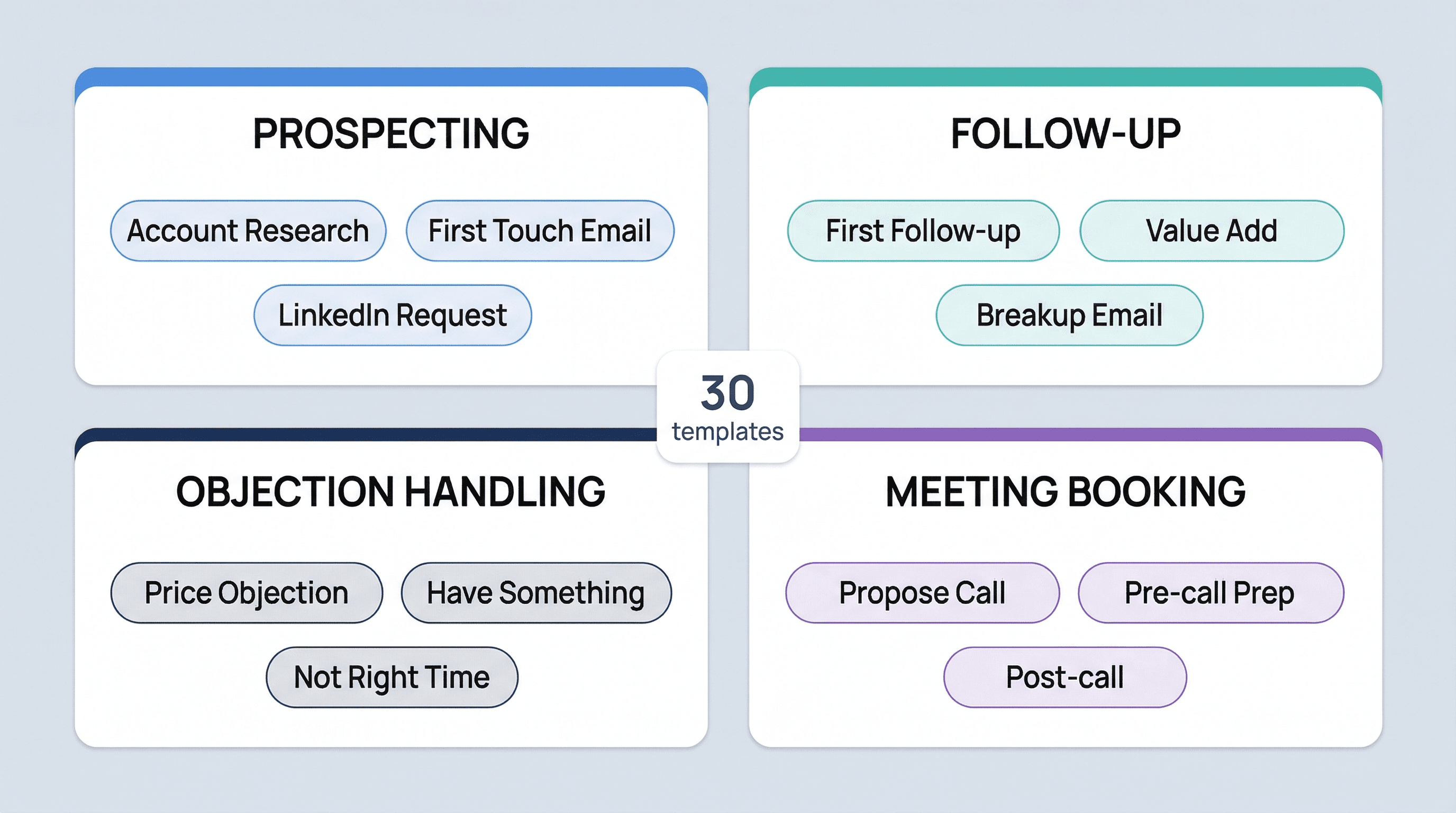
Use AI for top-of-funnel execution: account research, initial outreach, multi-channel follow-up, scheduling. Keep humans for discovery calls, objection handling, and relationship work.
The SDR function as it's traditionally scoped—volume prospecting, cadence management, basic follow-up—is mostly automatable now. What isn't automatable is the judgment call, the live conversation, the long-term relationship.
If you're considering replacing an SDR hire, the relevant comparison isn't "AI vs human." It's "what do I need this hire to actually do, and how much of that is work a computer can't do?"
For most early-stage agency pipelines, the answer is: most of it can be automated. The human you need isn't an SDR. It's a closer.
See the replace SDR solution and follow-up automation for how this works in practice. For tool comparisons, see AI SDR tools.