B2B WhatsApp Outreach: What Works and What Gets You Blocked
WhatsApp reply rates can hit 40–60% in the right context. Here's when to use it, how to not ruin it, and what the data says.
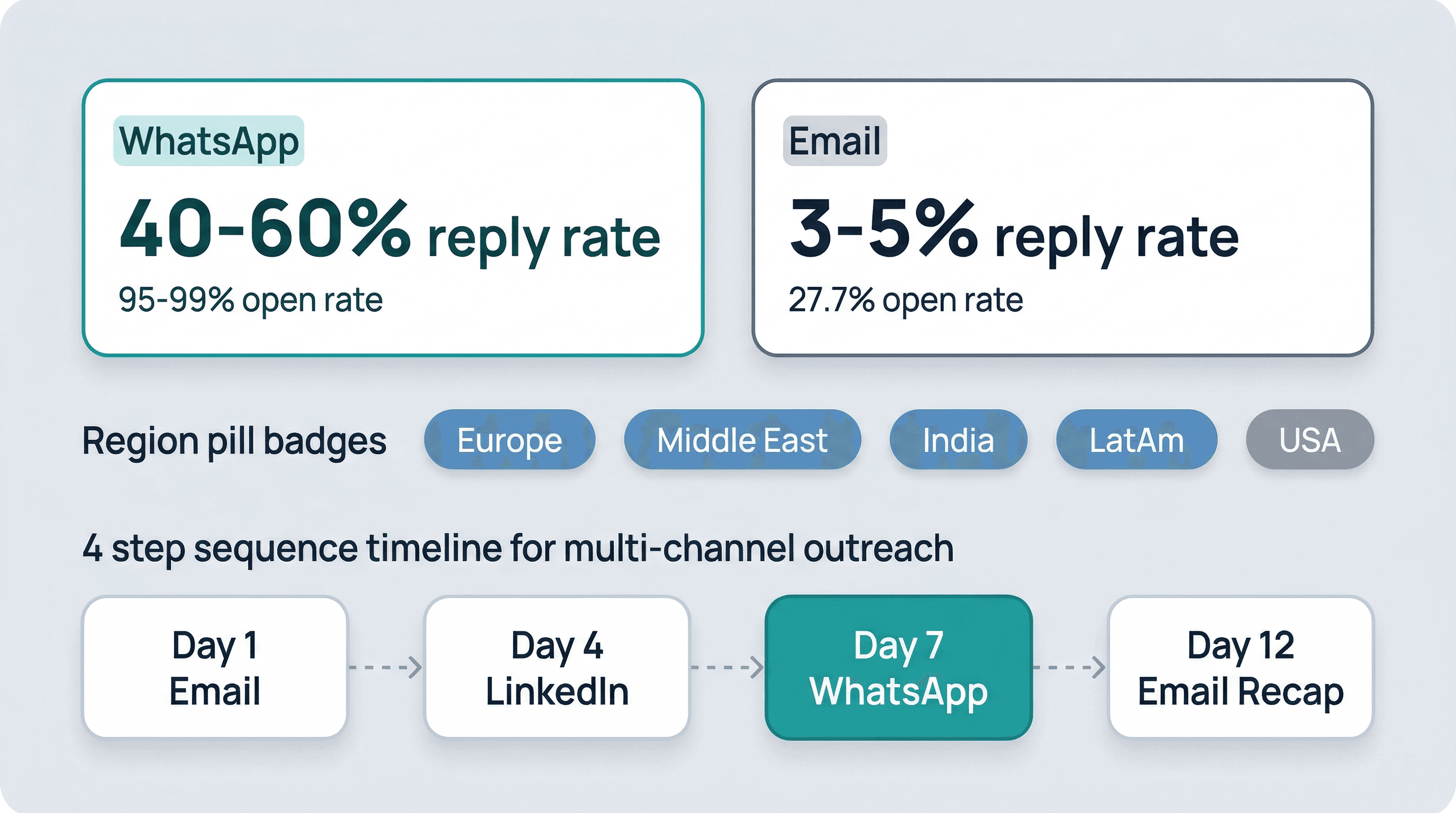
The average WhatsApp message gets opened within minutes. The open rate runs 95–99%. And for B2B outreach in Europe, the Middle East, India, and Latin America, reply rates of 40–60% are real and documented—not marketing copy.
Compare that to cold email's 3.43% platform average and the channel looks obvious. But WhatsApp outreach at scale is not obvious, and the gap between what's possible and what most teams actually do with it is wide.
Why WhatsApp performs so differently from email
Email is a professional broadcast medium. People expect to receive marketing there. They have filters, labels, and the trained reflex to archive things quickly. A cold email from an unknown sender gets about 1–2 seconds before it's gone.
WhatsApp is personal. It lives on someone's phone next to their family group chat. An unknown contact appearing there feels different—more intrusive if it's wrong, more real if it's right. That proximity is what drives the open and reply rates. It's also what gets accounts banned when teams abuse it.
Operationally: WhatsApp messages have near-perfect deliverability. No spam filters. No "promotions" folder. The message either arrives or it doesn't.
Where it works
The regional breakdown matters more than most teams realize. In Spain, Italy, Germany, Brazil, India, and across the Middle East, WhatsApp is a standard professional channel. Business contacts send contracts on it. It's not unusual to receive a genuine first outreach on WhatsApp and respond the same day.
In the US, this is mostly not the case. WhatsApp's US adoption is lower, and professional norms haven't shifted there the same way. A US decision-maker getting a WhatsApp message from an unknown number is more likely to mark it spam than reply.
So channel selection by geography isn't optional. It's the difference between a 40% reply rate and an account restriction.
What a good WhatsApp message looks like
Short. Direct. Clear about why you're reaching out.
The model that works:
- Establish context in the first line—where you've seen them, a specific reason for reaching out, or a reference to the email or LinkedIn message they got before
- Ask one specific thing
- Keep it under 80 words
The model that gets you blocked:
- Long intro about your company
- Three bullet points about your service
- "Let me know if you want to jump on a quick call!"
People on WhatsApp respond conversationally or not at all. Long sales copy reads as obviously automated, even when it isn't.
Timing and sequencing
WhatsApp works best as a follow-up channel, not a cold opener. The higher open and reply rates come from contexts where:
- The prospect has already received an email or LinkedIn message
- There's a specific, named reason for the follow-up
- The gap between email and WhatsApp message is appropriate (a few days, not a few hours)
A sequence that works for European or LatAm outreach:
- Day 1: Email with account-specific context
- Day 4: LinkedIn connection request
- Day 7: WhatsApp follow-up referencing the email
- Day 12: Email recap if no reply
Done this way, combined reply rates of 30–40% are achievable. Done as random cold WhatsApp blasting, the only outcome is getting the account restricted.
Volume and compliance limits
WhatsApp Personal and WhatsApp Business apps are not built for outreach at scale. Sending to too many new contacts in a short window triggers rate limits and account restrictions. If you're running outreach to more than a few hundred contacts per week on WhatsApp, you need the WhatsApp Business API—which requires approval, a verified number, and compliance with their messaging policies.
The practical constraint: WhatsApp works at the scale of deliberate, targeted outreach. It is not a mass channel. Teams that treat it as one get burned.
The right framing
WhatsApp isn't a replacement for email. It's a second-touch channel for contexts where it's appropriate—the right regions, the right role, warm enough context. Combined with email, three-channel sequences (email + LinkedIn + WhatsApp) can generate 40–50% combined response rates.
The mistake is either ignoring it entirely (leaving real uplift on the table for European and LatAm markets) or treating it as a shortcut to spray messages at scale (account ban, zero results).
See how this fits into multi-channel outreach and buying committee coverage. For tool comparisons, check Entesale vs Artisan.