Multi-Channel Sales Outreach: How to Build a Sequence That Gets Replies
Three-channel sequences get 287% more responses than single-channel. Here's the structure, the channel logic, and what actually moves someone from cold contact to booked meeting.
Most outreach fails not because the message is wrong, but because it arrives on one channel and stops there.
The contact missed the email. The LinkedIn message went unread for a week. There was no next step. The sequence ended after three attempts and the prospect never knew you existed.
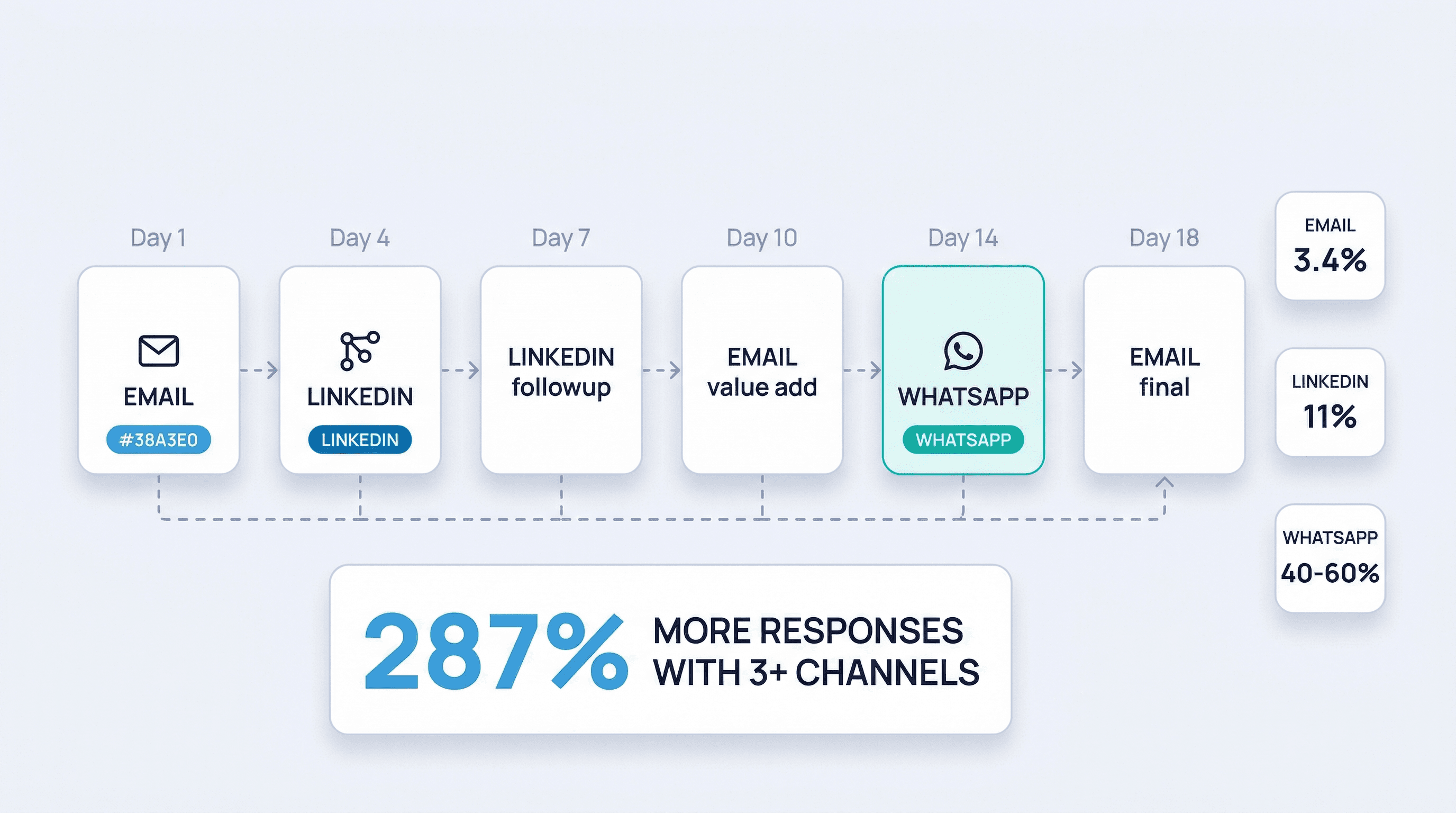
Three-channel sequences get 287% more responses than single-channel outreach. That number comes from Outreaches.ai's 2025 analysis of cold outreach benchmarks across email, LinkedIn, and WhatsApp. It's not surprising when you think about how people actually work—they're more reachable in some channels than others, and that varies by role, region, and how their day runs.
The channel logic
Each channel has a different social contract.
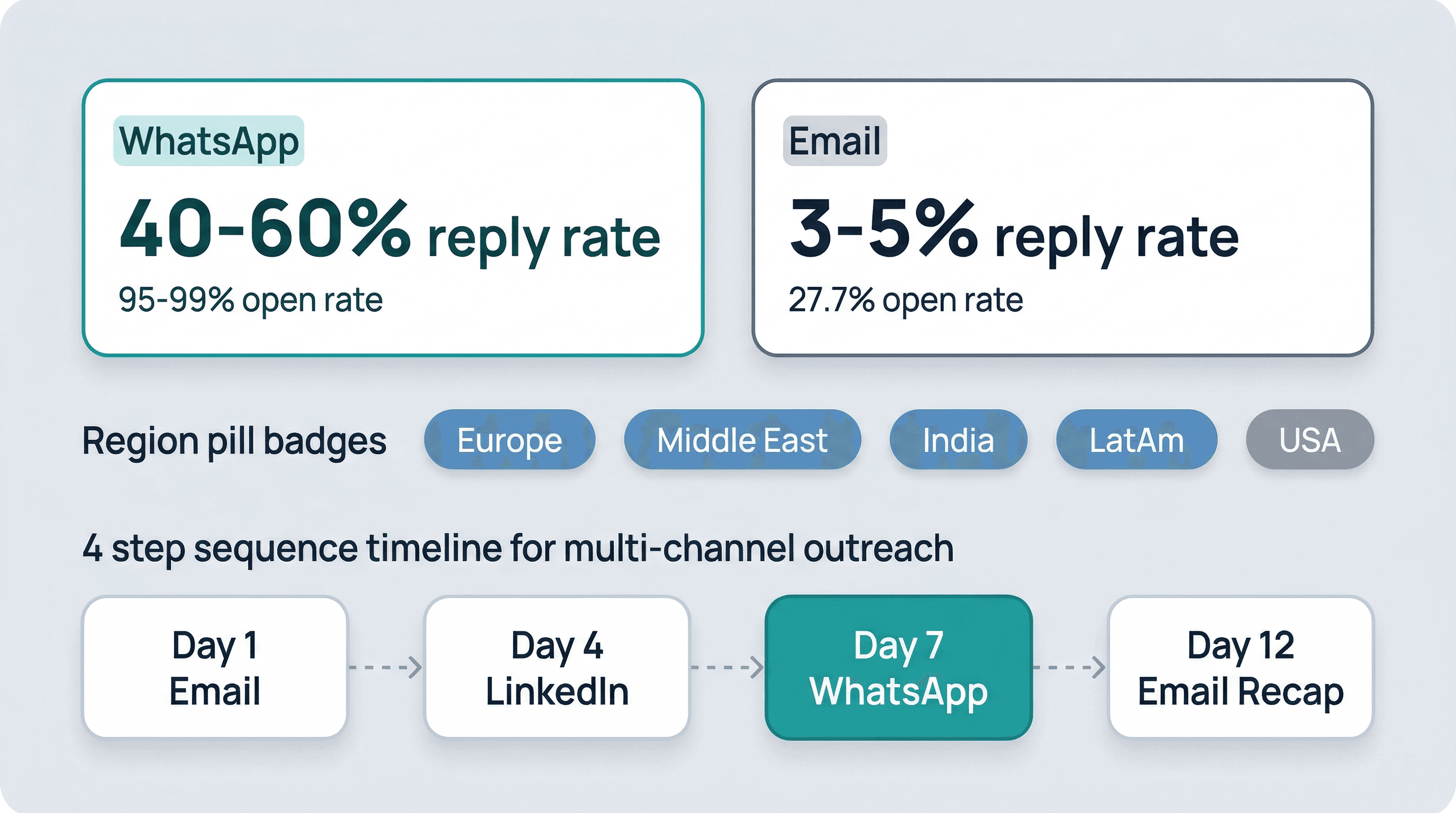
Email is expected. It's professional, low-friction to receive, and built for one-to-one communication at scale. The challenge is saturation—average cold email reply rates have dropped from 8.5% in 2019 to around 3.43% platform-wide in 2026. It's still the starting point because it sets context and respects professional norms.
LinkedIn is warmer by default. A connection request has a social dynamic that a cold email doesn't. The reply rate after a LinkedIn connection is accepted runs around 11%—three times better than email averages. The constraint is speed: LinkedIn's connection acceptance rate sits around 27%, and automation throttles mean you can't run it at the volume of email.
WhatsApp is personal. In Europe, the Middle East, India, and Latin America, it's a standard professional channel. Reply rates of 40–60% are real in those contexts. In the US, adoption is lower and it can feel intrusive as a cold channel.
The sequence logic is: start broad and scalable (email), add social context (LinkedIn), then use the highest-signal channel (WhatsApp) for prospects in markets where it's appropriate.
A sequence structure that works
This model is built for a European or LatAm prospect in a professional services context:
| Day | Channel | What to send | |---|---|---| | 1 | Email | Personalized first touch with specific account context | | 4 | LinkedIn | Connection request with brief note | | 7 | LinkedIn | Message to accepted connection referencing the email | | 10 | Email | Follow-up that adds value—a data point, a relevant example | | 14 | WhatsApp | Short follow-up referencing prior outreach | | 18 | Email | Final step—brief, direct, leaves the door open |
For US prospects without WhatsApp adoption, swap day 14 for a LinkedIn message or a voice follow-up on high-fit accounts.
What drives the 58/42 split
Instantly's 2026 benchmark found that 58% of all replies come from the first step. But 42% come from follow-ups. That means almost half of the replies you'll ever get from a sequence require persistence past step one.
Most teams stop after two or three attempts. Not because they have a good reason to—because follow-up is easy to defer when you're managing 40 other threads. And sequences that live in a spreadsheet don't execute themselves.
The teams with the best reply rates run full sequences consistently. They don't give up after the first touch because the pipeline looks thin in week three.
One CTA per touch
The most common reason messages don't convert isn't the channel. It's asking for too much.
Every message should have one thing you want the person to do. Not "reply if interested or let me know if you'd prefer I connect you with your team's head of operations or schedule a call at a time that works for you." Just one thing.
The ask should match the relationship. A first email to a cold prospect shouldn't ask for a 45-minute call. It should ask for something low-stakes—a quick reply, a confirmation that it's the right person, a reaction to a specific question.
Context across channels
When you move from email to LinkedIn to WhatsApp, you carry the conversation. Don't start fresh on each channel as if the previous messages didn't happen.
"I sent you an email on Tuesday about [specific thing]—thought I'd connect here too" is a better LinkedIn opener than a second cold pitch. The recipient knows you've been reaching out, and referencing it honestly signals intent without pretending otherwise.
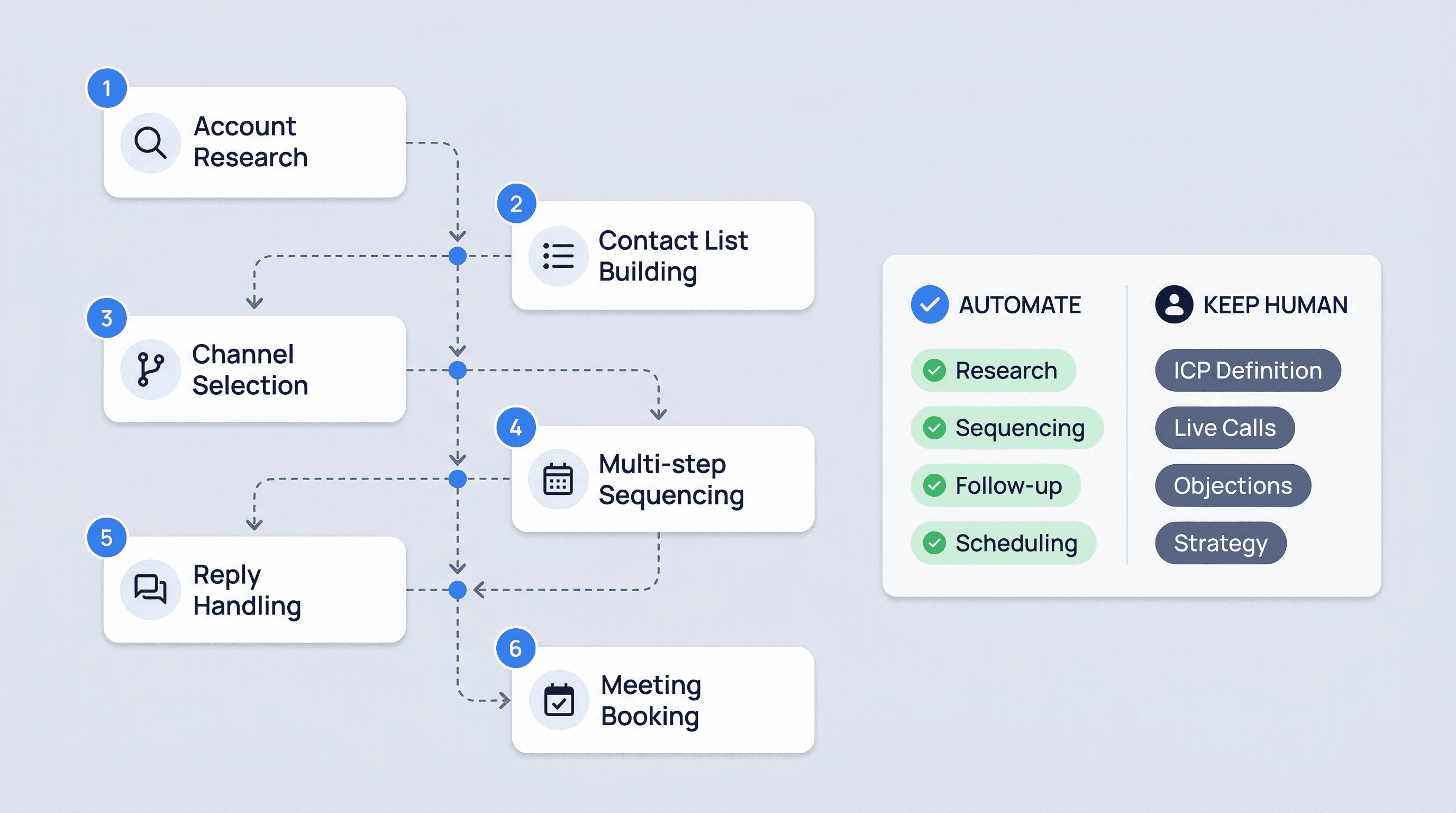
Maintaining context across channels requires tracking what you sent, when, and where. At small scale, that's a spreadsheet. At the scale of a real outreach motion, it needs to be automated.
See multi-channel outreach and reply handling for how this runs in practice. If you're deciding between platforms, see Entesale vs Apollo.