Cold Email Subject Lines That Get Opens in 2026
What the data says about open rates, subject line length, and the patterns that actually work—with examples.
The subject line is not your first impression. The sender name is.
If the person doesn't recognize who it's from, a good subject line won't save it. But a bad subject line will kill a good sender reputation. So the sequence matters: warm the sender name, then make the subject work.
With that context, here's what the data actually says about which subjects open.
What the benchmarks tell us
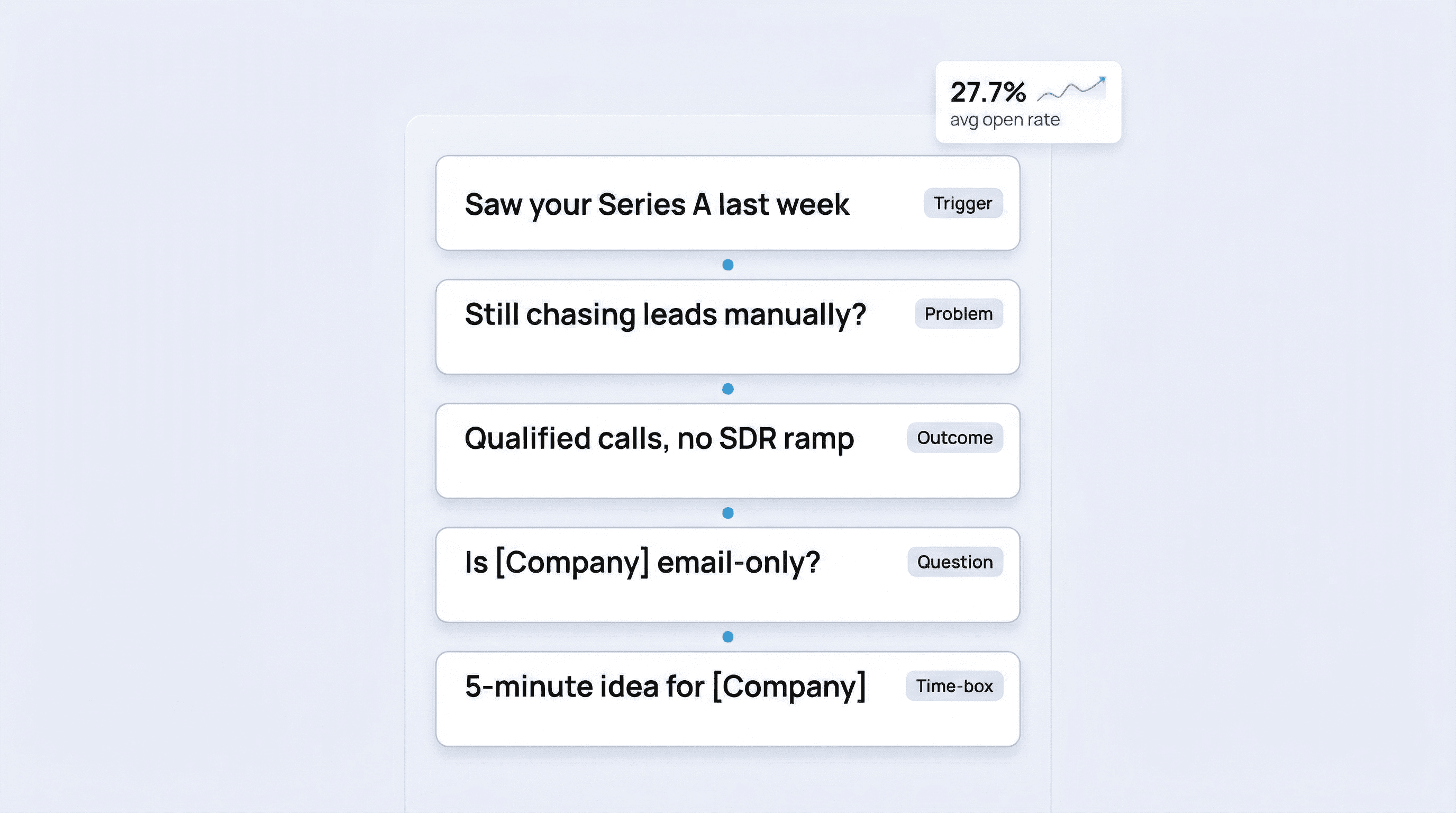
The average cold email open rate across all senders in 2026 is about 27.7%, down from around 36% in 2023 when Apple's Mail Privacy Protection was inflating numbers. Smaller, highly targeted lists frequently hit 50%+. Bulk campaigns over 1,000 recipients tend to cluster around 20–30%.
The gap isn't random. Small-list senders are usually more selective about who they contact, write more specific copy, and warm their domains properly. The subject line quality tends to follow the targeting quality.
One thing worth noting: open rates are harder to trust than before MPP. A tracked open can now mean "Apple prefetched this on an iPhone." Reply rates are the cleaner signal.
That said, subjects that don't get opens don't get replies either. So:
Patterns that work
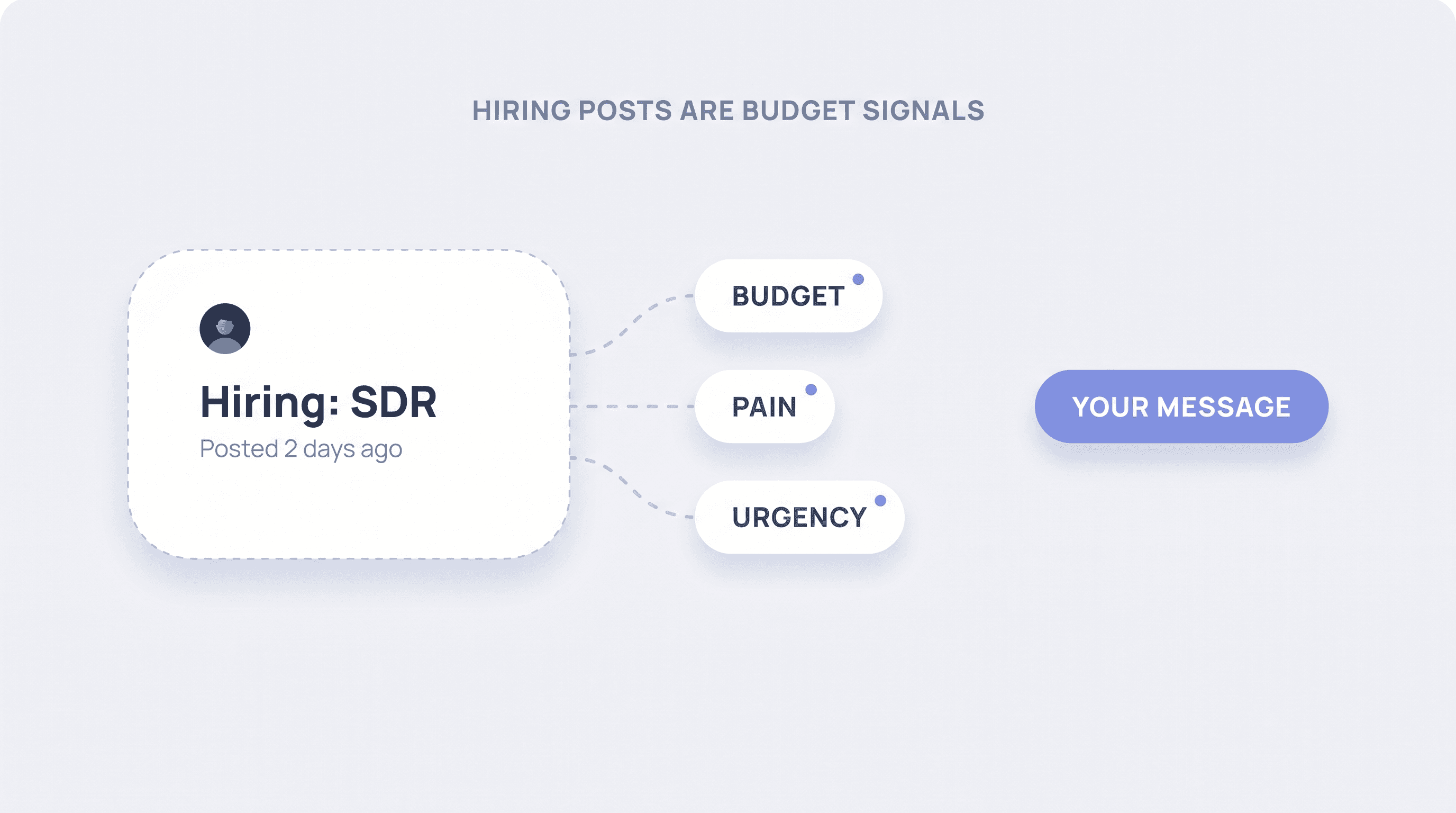
Trigger-based. Referencing something that recently happened at the company—a funding round, a new hire, a product launch, a job posting—gives the subject immediate context. "Saw your Series A last week" is more likely to get a look than "Quick question." The recipient knows you did some homework.
Problem-specific. Name the pain directly and the right person will open it. "Still chasing prospects manually?" for a VP Sales who runs a small team. "Losing agency clients to scope creep?" for a founder. The specificity signals you know something about their situation.
Outcome-based. These lead with the result, not the feature. "More qualified calls without hiring another SDR" or "3 accounts your team has been cold-emailing for weeks." The recipient reads it and thinks: that applies to me.
Direct question. Short. Low friction. "Still using [competitor]?" or "Handling follow-up manually at [Company]?" The question format implies you might know something useful.
Time-box. "2-minute idea for [Company]" signals a low ask. People open when they can see the cost of doing so is small.
What to avoid
Urgency tricks don't work on buyers who get 50 outreach emails per week. "Last chance to..." or "Don't miss this" read as spam signals and trip deliverability filters.
Generic openers kill campaigns. "Quick question" and "Following up" are so overused that they've become pattern-noise. They get opened sometimes—but only when the sender name already has trust.
Caps and punctuation abuse: ALL CAPS, excessive exclamation marks, or weird character substitutions still get filtered by most modern spam checkers. You're not getting around the filter, you're just flagging yourself faster.
Any subject line that could apply to 10,000 different people is too generic. If you couldn't say "this subject is specifically for this company," rethink it.
Quality checks before sending
The 7-word test: read your subject out loud. If it takes more than a breath, it's too long.
The specificity test: could you send this subject line to 500 contacts without changing a word? If yes, make it more specific.
The preview test: look at how the subject line appears on mobile, where most emails are opened. Check what gets cut off.
The match test: does the first sentence of your email immediately match what the subject implied? Subject-body mismatch is a quick way to train people not to open your emails.
A few examples
Rather than a long list of templates, it's more useful to see the pattern at work:
| Pattern | Example | |---|---| | Trigger-based | "About your new Head of Sales hire" | | Problem-specific | "Still chasing warm leads manually?" | | Outcome-based | "Qualified meetings, no SDR ramp" | | Direct question | "Is [Company] still running email-only outreach?" | | Time-box | "5-minute read on your pipeline gap" |
Every one of these has a specific audience in mind. That's the point—a subject line is a filter, not a net. You want the right person to open it, not everyone.
Pair strong subjects with multi-channel outreach and reply handling. If the subject is working but meetings aren't converting, meeting booking closes the gap.